Welcome to the Shahbazi Lab! Our research group is focused on understanding and harnessing the power of immune engineering, cancer biology and regenerative medicine. We apply cutting-edge technologies including CRISPR-based gene editing, exosome biology, single-cell multi-omics and advanced cell therapies to develop next-generation solutions for hematological malignancies, cancer and immune dysfunctions.

Focus Areas
- Exosome-based enhancement of hematopoietic stem cell (HSC) transplantation
- CAR-T and γδ T cell immunotherapies for breast and hematological cancers
- Mechanisms of non-coding RNAs in cancer progression
- Single-cell transcriptomics and proteomics for immune cell characterization
- In vivo CRISPR genome engineering and delivery systems
Current Projects
- Single cell multiomics strategy to understand the immunomodulatory effect of cancer exosomes
- Investigating the role of exosome stimulation in improving HSC engraftment and immune reconstitution
- Identification and engineering of triple-negative breast cancer-specific γδ TCRs
- Developing prostate cancer specific CRISPR nanoformulations
- In vivo CRISPR delivery platforms for Thalassemia and sickle cell disease
Lab Members
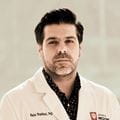
Reza Shahbazi, PhD
Assistant Professor of Medicine
Principal Investigator
Reza Shahbazi, PhD, is an assistant professor of medicine at Indiana University School of Medicine. He is a member of the Brown Center for Immunotherapy and the Indiana University Melvin and Bren Simon Comprehensive Cancer Center. His research integrates gene editing, exosome biology and cellular immunotherapy to develop next-generation treatments for hematologic malignancies and solid tumors.
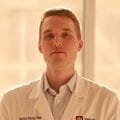
Noah H. Richardson, MD
Former Medical Oncology Fellow
Current Clinical Faculty
Noah Richardson, MD, previously served as a medical oncology fellow in the Shahbazi Lab and is now a clinical faculty member specializing in genitourinary oncology. His research focuses on developing next-generation CRISPR-based nanoformulations for the treatment of castration-resistant prostate cancer. He is also advancing CRISPR-induced immunotherapy strategies for melanoma.
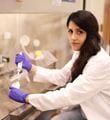
Sanam Rezaei Benam, MS
Research Analyst
Sanam is a molecular biologist currently serving as a research analyst. She designs experimental methodologies and analytical strategies to study exosomal communication with hematopoietic stem cells (HSCs). Her work aims to enhance the efficiency of bone marrow transplantation through targeted exosome-based interventions.

Samaneh Maleknia, PhD
Postdoctoral Fellow in Medicine
Samaneh Maleknia, PhD, is a postdoctoral scholar with expertise in bioinformatics and biostatistics. Her research centers on utilizing single-cell multi-omics approaches to investigate how cancer-derived exosomes influence immune responses and metastatic progression. By integrating computational modeling and systems biology, she aims to uncover novel regulatory mechanisms that drive tumor evolution and immune modulation, with the ultimate goal of informing precision oncology strategies.

Stephen Cieslak
PhD Candidate
Stephen is a PhD candidate in the Department of Biochemistry and Molecular Biology at Indiana University School of Medicine. His research focuses on developing a novel immunotherapy approach for triple-negative breast cancer (TNBC) by engineering γδ T cell receptors (TCRs). His work aims to enhance the specificity and efficacy of immune-based therapies against hard-to-treat cancers.

Brianna Lane
IU Simon Comprehensive Cancer Center Summer Intern
Brianna is a student at Indiana University Kokomo majoring in biology with a pre-med focus. She is a summer intern for the IU Simon Comprehensive Cancer Center Educational Pathways for Summer Research (EPCR) program. Her project focuses on developing leukemia- and lymphoma-specific CAR-T cells using CRISPR-based nanoformulations, aiming to enhance precision and potency in immunotherapy.