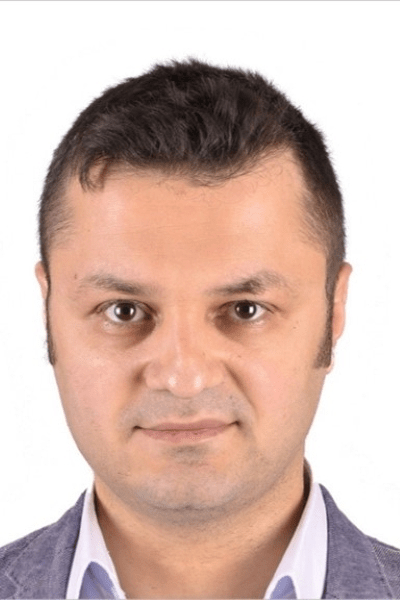
Sedat Kacar, PhD
Postdoctoral Fellow in Medicine
Associate Professor (equivalent title, Türkiye)
- skacar@iu.edu
- Address
-
R3 C445
PULM
Indianapolis, IN 46202 - PubMed:
-

Bio
Dr. Sedat Kacar earned his bachelor's degree in Molecular Biology and Genetics, where he also gained practical experience working in Forensic Science for two years, developing skills in DNA analysis and molecular diagnostics. Motivated by a deeper interest in human biology, he pursued graduate education in Histology and Embryology, obtaining both his master's and Ph.D. degrees.
Throughout eight years of lecturing and research in Histology, Dr. Kacar developed a strong foundation in tissue structure and cellular organization, which now enables him to analyze single-cell and spatial transcriptomics data from any organ in a robust and biologically meaningful way.
Since 2021, he has been working intensively on single-cell RNA sequencing and spatial transcriptomics as a Bioinformatics Scientist (post-doctoral researcher) at Indiana University School of Medicine, specializing in pulmonary-associated diseases such as pulmonary hypertension, hypoxia, and sickle cell disease. With over a decade of experience bridging wet lab techniques and computational biology, he focuses on uncovering novel biological insights from high-dimensional data.
Dr. Kacar is passionate about integrating different omics data, including spatial and single-cell transcriptomics, to advance the understanding of tissue architecture, vascular remodeling, and cellular heterogeneity in disease models. He aspires to map all organs at single-cell resolution and integrate multiple omics layers to build comprehensive, organ-wide molecular atlases.
Key Publications
- Durba Pal, Subhadip Ghatak, Kanhaiya Singh, Ahmed Safwat Abouhashem, Manishekhar Kumar, Mohamed El Masry, Sujit K. Mohanty, Ravichand Palakurti, Yashika……..Sedat Kacar, …… Mervin C. Yoder and and Chandan K. Sen. (2023) Identification of a physiologic vasculogenic fibroblast state to achieve tissue repair. Nature Communication 14 (1), 1129.
- Joel James*, Aleksandr Dekan*,Sedat Kacar* (co-first author) , Maki Niihori , Takanori Sano , Nolan McClain, Mathews Varghese , Dinesh Bharti , Odunayo Susan Lawal1, Marco Padilla-Rodrigez , Dan Yi, Huanling Gao , Robert S Tepper, Zhiyu Dai, Oleg Gusev, Olga Rafikova, Ruslan Rafikov (2024) Novel Populations of Lung Capillary Endothelial Cells and Their Functional Significance. (MANUSCRIPT SUBMITTED)
- Dr Sujit Mohanty , Kanhaiya Singh , Manishekhar Kumar , Sumit Verma , Rajneesh Srivastava , Dr Surya Gnyawali , Ravichand Palakurti , Dr Sedat Kacar , Yashika Rustagi , Dr Priyanka Verma , Professor Subhadip Ghatak , Dr Edward Hernandez , Savita Khanna , Sashwati Roy , Mervin Yoder , Dr Ajay Sahi , Mohamed El Masry , Dr Pradipta Banerjee , Dr Peter Rubin. (2024). Vasculogenic Skin Reprogramming Requires TET-mediated Gene Demethylation in Fibroblasts for Rescuing Impaired Perfusion in Diabetes. Nature Communication
- Ahmed S. Abouhashem, Sherine K. Saber, Ahmed A. Elbaz, Sedat Kacar, Kanhaiya Singh, Chandan K. Sen, Hassan M.E. Azzazy, Chapter 51 - Using single-cell analysis to investigate disease severity in elderly patients with COVID-19, International and Life Course Aspects of COVID-19, Academic Press, 2024, Pages 623-633, ISBN 9780323956482.
- Rajneesh Srivastava; Kanhaiya Singh; Ahmed S Abouhashem; Manishekhar Kumar; Sedat Kacar; Sumit S Verma; Sujit K Mohanty; Mithun Sinha; Subhadip Ghatak; Yi Xuan; Chandan K Sen. (2023) Human Fetal Dermal Fibroblast Diversity is Characterized by Dominance of Pro-Healing Annexin1-FPR1 Signaling. iScience 26(9).
- Sumit S Verma, Chandan K Sen, Rajneesh Srivastava, Surya C Gnyawali, Parul Katiyar, Ajay K Sahi, Manishekhar Kumar, Yashika Rustagi, Sheng Liu, Diksha Pandey, Ahmed S Abouhashem, Leila NW Fehme, Sedat Kacar, Sujit K Mohanty, Julie Faden-McCormack, Michael P Murphy, Sashwati Roy, Jun Wan, Mervin C Yoder, Kanhaiya Singh (2025) Tissue nanotransfection-based endothelial PLCγ2-targeted epigenetic gene editing rescues perfusion and diabetic ischemic wound healing. Molecular Therapy, Volume 33, Issue 3, 950 - 969
| Year | Degree | Institution |
|---|---|---|
| 2020 | PhD | Eskisehir Osmangazi University |
| 2015 | MS | Eskisehir Osmangazi University |
| 2010 | BS | Middle East Technical University |
-
Single-cell RNA sequencing and spatial transcriptomics in pulmonary diseases
-
Development of single-cell atlases and rare cell population identification
-
Multi-modal data integration across transcriptomics platforms (Stereo-seq, Parse Biosciences, 10x Genomics)
-
Disease mechanism discovery through computational modeling and pathway analysis
-
Bioinformatics pipeline development for scalable and reproducible analysis
-
Translating computational findings into actionable biological and clinical insights
-
Interdisciplinary collaborations with clinicians, experimental biologists, and computational scientists